
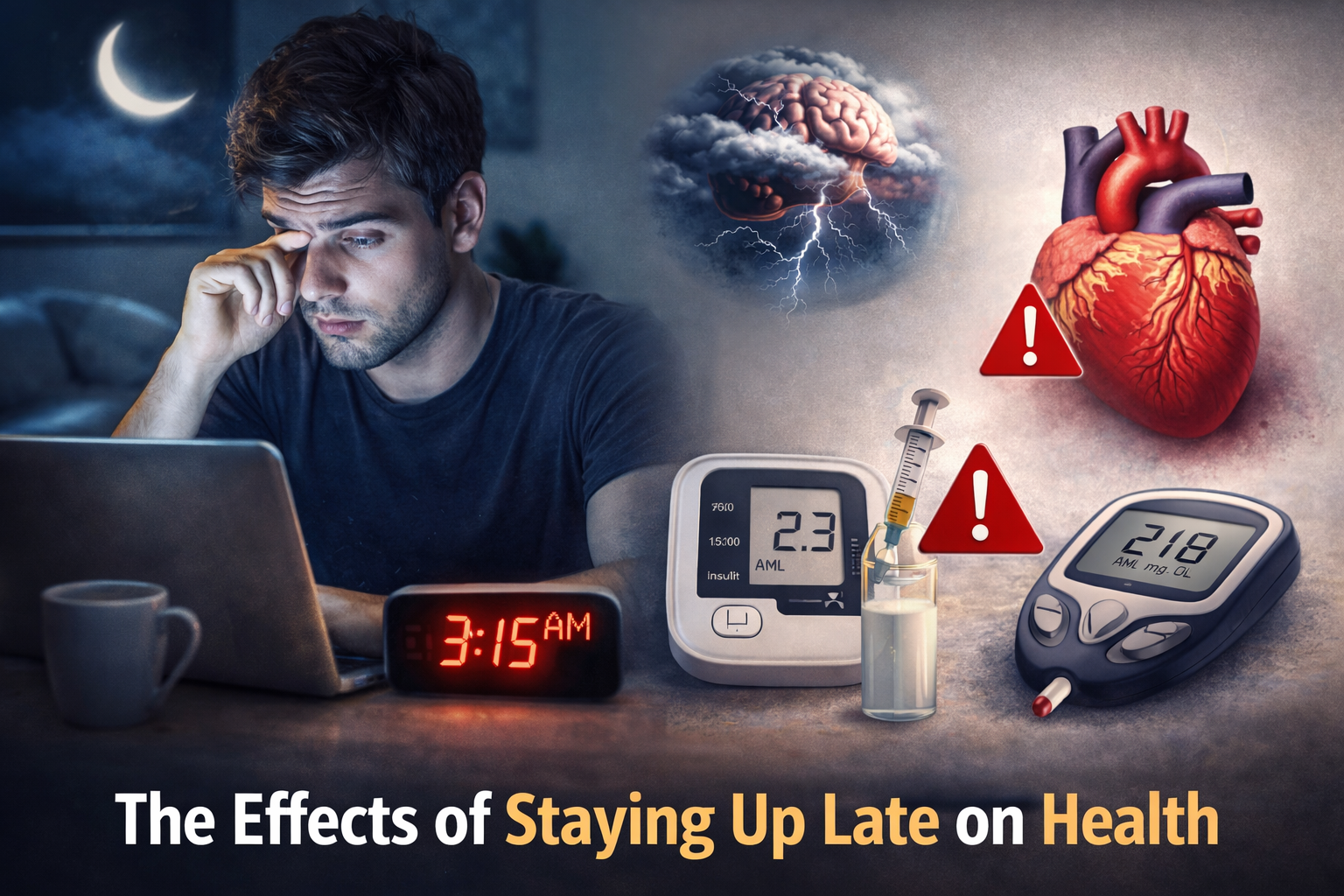
The Impact of Staying Up Late on Human Health: Hidden Dangers of Sleep Deprivation
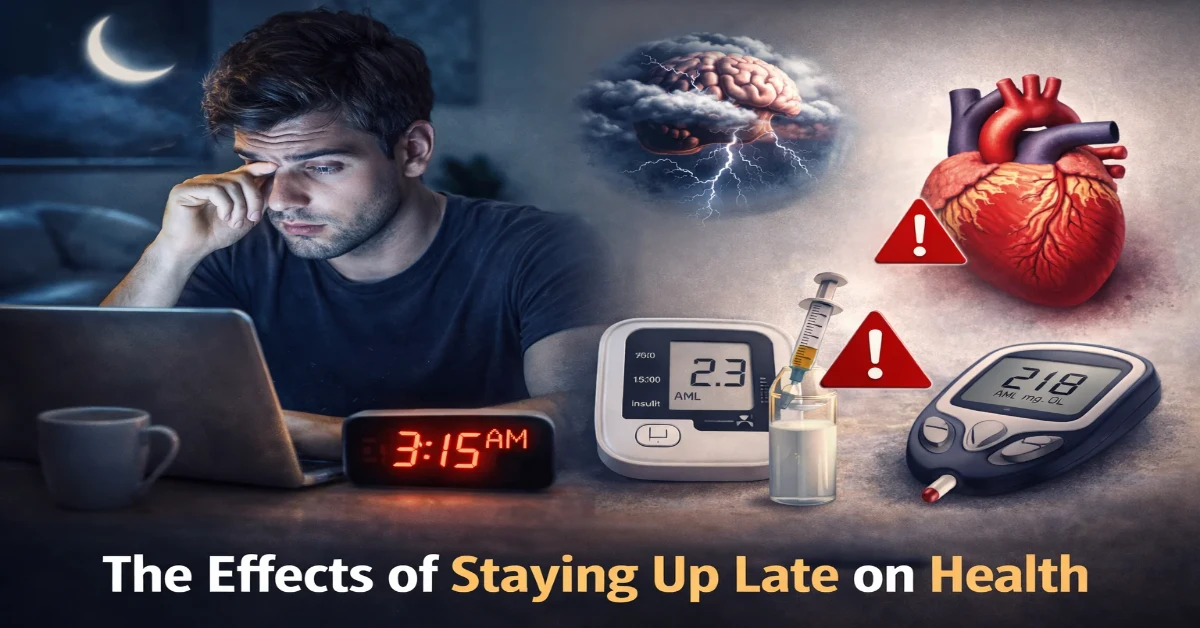
In today’s fast-paced digital world, staying up late has become a common habit—whether for studying, working, or entertainment. However, the effects of staying up late on health are more serious than many people realize. While occasional late nights may seem harmless, consistently sacrificing sleep can negatively affect both physical and mental well-being.
Scientific research shows that sleep is not a luxury but a biological necessity. Lack of sleep, also known as sleep deprivation, can impact nearly every system in the body, from brain function to heart health.
What Happens When You Stay Up Late?
When you stay awake late at night, you disrupt your body’s internal clock (circadian rhythm). This natural cycle controls sleep, hormone release, and energy levels.
As a result, your body may:
- Produce less melatonin (sleep hormone)
- Increase stress hormones like cortisol
- Experience irregular energy patterns
Over time, this disruption leads to what experts call “sleep debt,” which accumulates when you don’t get enough rest.
If you’re trying to manage your daily schedule and calculate sleep hours accurately, using a simple time tool can help:
👉 https://fast-convert.net/time-converter
Short-Term Effects of Staying Up Late
Even one night of poor sleep can have noticeable effects on your body and mind.
1. Reduced Concentration and Memory
Sleep plays a key role in brain function. Without enough rest, your ability to focus, learn, and remember information decreases significantly.
2. Mood Changes
People who stay up late often feel:
- Irritable
- Anxious
- Easily stressed
Sleep deprivation is closely linked to emotional instability and mood swings.
3. Daytime Fatigue
Lack of sleep leads to extreme tiredness during the day, reducing productivity and increasing the risk of mistakes.
Long-Term Health Risks
Consistently staying up late can lead to serious long-term health problems.
1. Increased Risk of Heart Disease
Sleep deprivation prevents the natural drop in blood pressure during sleep, increasing the risk of cardiovascular diseases.
2. Weakened Immune System
Your immune system becomes less effective when you don’t get enough sleep, making you more vulnerable to infections.
3. Weight Gain and Obesity
Staying up late affects hormones that control hunger, leading to increased appetite and unhealthy eating habits.
4. Higher Risk of Diabetes
Sleep loss affects how the body processes sugar, increasing the risk of type 2 diabetes.
Mental Health and Staying Up Late
The impact of staying up late is not limited to physical health—it also affects mental well-being.
People who regularly sleep late are more likely to experience:
- Depression
- Anxiety
- Difficulty managing emotions
Studies show that sleep deprivation can impair judgment and make everyday tasks feel more difficult.
Why Staying Up Late Affects Teenagers More
Teenagers are particularly vulnerable to the effects of late-night habits. Their bodies naturally shift toward later sleep times, but school schedules often force early wake-ups.
This leads to:
- Chronic sleep deprivation
- Poor academic performance
- Increased stress levels
Over time, these patterns can negatively impact both physical and emotional development.
Lifestyle Habits Linked to Late Nights
Staying up late often leads to unhealthy behaviors, such as:
- Late-night snacking
- Increased screen time
- Reduced physical activity
These habits further worsen health outcomes and create a cycle of poor sleep and poor lifestyle choices.
To manage daily habits like calorie intake or activity percentages, tools like this can be useful:
👉 https://fast-convert.net/calculators
How to Fix Your Sleep Schedule
Improving your sleep habits can significantly enhance your health and quality of life.
1. Set a Consistent Bedtime
Go to bed and wake up at the same time every day.
2. Reduce Screen Time at Night
Avoid phones and computers at least 1 hour before bed.
3. Create a Relaxing Routine
Reading or meditation can help signal your body that it’s time to sleep.
4. Limit Caffeine Intake
Avoid caffeine in the evening.
5. Track Your Sleep
Understanding your sleep patterns can help you improve them. You can estimate sleep durations and plan your schedule using:
👉 https://fast-convert.net/calculator
Conclusion
The effects of staying up late on health are significant and should not be ignored. While it may seem harmless in the short term, consistent sleep deprivation can lead to serious physical and mental health issues, including heart disease, weakened immunity, and emotional instability.
Prioritizing sleep is one of the most important steps you can take to protect your overall well-being. By adopting healthy sleep habits and maintaining a consistent routine, you can improve your energy levels, productivity, and long-term health.
Remember: sleep is not wasted time—it is an essential investment in your body and mind.