The Effect of Exercise on Blood Pressure
Regular physical activity is one of the most effective non-drug ways to help lower blood pressure. Research shows that aerobic exercise can reduce systolic and diastolic blood pressure, and resistance training may also contribute to meaningful improvements.
In people with hypertension, the blood-pressure benefit is often larger than in people with normal blood pressure.
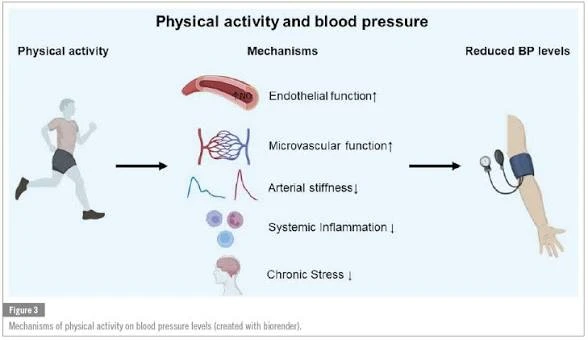
Exercise helps the heart pump more efficiently, improves blood vessel function, and reduces the strain on the cardiovascular system. Over time, these changes can make the heart work with less effort and may lower resting blood pressure.
How Exercise HelpsAerobic exercise such as brisk walking, cycling, swimming, or jogging is the most studied type for blood pressure control. Reviews and guidelines report that regular aerobic activity can lower blood pressure by about 4 to 8 mm Hg in many people with hypertension. Resistance exercise, including weight training and resistance bands, also shows benefit and can be safely included in a structured.
program.Exercise may also help through weight loss, reduced stress, better insulin sensitivity, and improved arterial flexibility. These combined effects make it an important part of long-term hypertension management.
Practical Exercise TargetsA common recommendation is at least 150 minutes per week of moderate-intensity aerobic exercise, or 75 minutes per week of vigorous exercise, spread across several days.
To calculate your calorie :
https://fast-convert.net/calculators/calorie
For many people, even starting with 10-minute sessions and gradually increasing duration can be helpful.
Examples of suitable activities include:Brisk walking.Cycling.Swimming.Light jogging.Resistance band training.Body-weight exercises.High-intensity exercise can also lower blood pressure, but it should be used carefully in people with uncontrolled hypertension or other medical problems.
Important Safety NotesPeople with very high blood pressure, chest pain, dizziness, shortness of breath, or known heart disease should speak with a healthcare professional before starting a new exercise plan. Exercise is helpful, but it is not a replacement for prescribed medication when medication is neneed.
The safest results usually come from combining lifestyle changes with medical guidance.
Referenceshttps://pmc.ncbi.nlm.nih.gov/articles/PMC10713007/ https://pmc.ncbi.nlm.nih.gov/articles/PMC12611427/ https://www.nature.com/articles/s41598-023-37149-2 https://www.ncbi.nlm.nih.gov/books/NBK564314/ https://pmc.ncbi.nlm.nih.gov/articles/PMC4589552/ https://pmc.ncbi.nlm.nih.gov/articles/PMC4592179/ Legal DisclaimerDisclaimer: This article is provided for educational and informational purposes only and does not constitute medical advice, diagnosis, or treatment. Always consult a qualified healthcare professional before beginning, changing, or stopping any exercise program, especially if you have high blood pressure, heart disease, diabetes, or other chronic conditions. The author and publisher are not responsible for any injury, loss, or damage arising from the use or misuse of this information.