How to Build Muscle Naturally: A Science-Based Beginner’s Guide
Building muscle naturally does not require a complicated routine, expensive supplements, or training every day.
For many healthy adults, regular resistance training, sufficient protein and overall nutrition, gradual progression, and adequate recovery can support improvements in strength and muscle size over time.
Results vary based on training history, age, sleep, food intake, genetics, health status, and consistency.
This article provides general educational information and is not individualized medical, nutrition, or exercise advice.
Medical disclaimer:
This content is for general education only and does not diagnose, treat, or replace advice from a qualified healthcare professional. If you have an injury, chronic medical condition, heart or kidney disease, metabolic concerns, are pregnant, take prescription medication, or have a history of an eating disorder, speak with an appropriate healthcare professional before making major changes to exercise, diet, or supplement use.
What Builds Muscle?Muscle growth i.s an adaptation to resistance training.
When training provides enough challenge and is repeated consistently, the body can adapt by improving strength and, over time, increasing muscle size. Nutrition and recovery help support this process.
There is no single “perfect” workout routine, protein target, or supplement that guarantees results for everyone.
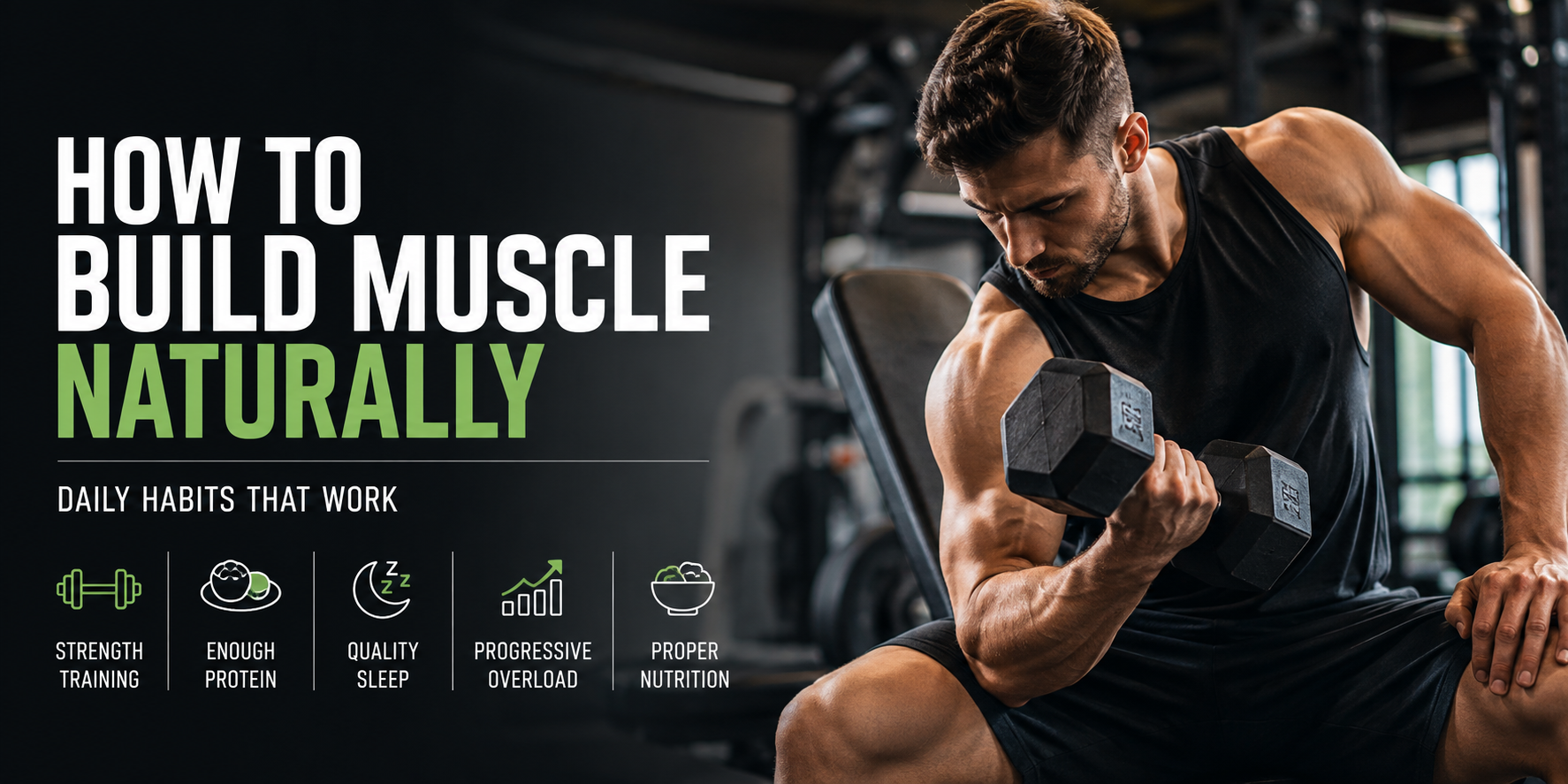
Build the Corre HabitsThe following habits can support natural muscle growth:Perform resistance training consistently.Include adequate protein and energy in your diet.
Increase training demands gradually over time.
Prioritize sleep and recovery.
Use exercise technique you can control safely.Follow a plan long enough to assess progress.
Consistency matters more than trying to follow an extreme routine for a short period.Eat Enough Protein.
Protein provides amino acids needed for normal tissue repair and adaptation after training.
For many adults who perform regular resistance exercise, approximately 1.6 grams of protein per kilogram of body weight per day can be a practical starting point, although individual needs may vary.
For example, a 70 kg person could begin by aiming for roughly 110 grams of protein per day.
Depending on total calories, training volume, age, personal goals, and medical factors, some people may need more or less.Helpful protein-rich foods include:EggsGreek yogurt and cottage cheeseMilk and other dairy foodsChicken, turkey, fish, and lean meatsLentils, beans, and chickpeasTofu, tempeh, and other soy foodsDistributing protein across main meals may be easier than trying to consume a very large amount at one time.
If you have kidney disease, another chronic condition, or a medically prescribed diet, seek individualized advice before substantially increasing protein intake.
Train Major Muscle GroupsYou do not need to train every day to make progress. A practical approach for many people is to train the major muscle groups approximately twice per week, while allowing sufficient recovery between demanding sessions for the same area.
Mayo Clinic advises strength exercises for major muscle groups at least twice weekly and recommends avoiding training the same muscle group on consecutive days.
A simple full-body session may include:Squats, split squats, or leg pressesPush-ups or bench pressesRows or assisted pull-up variationsHip hinges, Romanian deadlifts, or hip thrustsShoulder pressesOptional biceps, triceps, and core exercisesStart with loads and variations you can perform with control. If you are new to training, a qualified fitness professional can help you learn technique before you use heavier weights or more complex movements.
Progress GraduallyProgressive overload means making training gradually more challenging as your body adapts.
This does not mean increasing weight every workout or exercising through pain.You can progress by:Performing an additional repetition with good formAdding a small amount of resistanceAdding a set when recovery is adequateImproving range of motion and movement controlChoosing a slightly more difficult exercise variationResearch summarized in the American College of Sports Medicine’s resistance-training position stand indicates that progressive resistance training improves strength and muscle hypertrophy, and that higher weekly training volume can enhance hypertrophy for healthy adults.
Keep a simple training log with exercises, sets, repetitions, and resistance used.
This can help you make measured decisions instead of changing your program randomly.
Sleep and RecoveryRecovery supports training performance, energy, and consistency. Many adults benefit from approximately 7–9 hours of sleep per night, although sleep needs are individual.Useful sleep habits include:
Keeping a relatively consistent sleep and wake timeLimiting caffeine later in the dayMaintaining a dark, cool, and quiet bedroomAllowing time to wind down before bedReducing screen exposure if it interferes with sleepRest days are a normal part of an effective exercise routine.
Fatigue can affect exercise technique, and reduced control may increase injury risk during complex or high-intensity movements.
Eat Enough OverallProtein is important, but total energy intake also matters. Consistently eating too little can make it more difficult to train well and recover adequately.Some beginners and people returning to training may gain muscle without intentionally increasing calories.
For others, a modest, sustainable calorie surplus may make muscle gain easier.
The most appropriate approach depends on body composition, health status, activity level, and goals.Build meals mainly around nutrient-dense foods such as:
Rice, potatoes, oats, and whole grainsFruits and vegetablesEggs, dairy, fish, poultry, and lean meatsBeans, lentils, and soy foodsNuts, seeds, olive oil, and other unsaturated-fat sourcesAvoid extreme bulking strategies.
A gradual approach is generally easier to maintain and may limit unnecessary fat gain.
Can You Build Muscle at Home?Yes. Home training can support strength and muscle development, especially for beginners.
Resistance bands, adjustable dumbbells, a loaded backpack, or challenging bodyweight exercises can provide useful resistance.Practical home exercises include:
Push-upsSplit squats and lungesGlute bridges or hip thrustsRows using bands or safe home equipmentPull-ups or assisted pull-upsPike push-upsCore exercises with controlled techniqueAs you get stronger, you may need more resistance, a more demanding variation, additional repetitions, or more sets to keep progressing.
Elastic-band resistance training is among the approaches associated with improved hypertrophy in ACSM’s evidence review.
Muscle Gain and Fat LossSome people can gain muscle while reducing body fat, particularly beginners, people returning after time away from training, and individuals with higher starting body-fat levels. This is often called body recomposition, but it is not guaranteed and generally occurs gradually.
A reasonable starting approach may include regular resistance training, adequate protein, sleep, and a moderate—not extreme—calorie deficit if fat loss is the main goal.
If you have a history of disordered eating, unexplained weight change, or medical conditions affected by diet, obtain personalized support before restricting calories.Do You Need Supplements?No. You can build muscle naturally through regular food and resistance training.
Protein powder is a convenient food option, not a requirement, and it may be useful only when reaching protein needs through meals is difficult.
Creatine monohydrate is one of the most studied sports supplements. Evidence reviewed by the International Society of Sports Nutrition indicates that it can improve high-intensity exercise capacity and may support increases in lean mass during training in otherwise healthy people.
However, creatine is optional and should not replace training, adequate nutrition, or recovery. If you have kidney disease, another chronic condition, take medication, are pregnant, or are unsure about supplement suitability, discuss it with a qualified healthcare professional first.
A Simple First WeekIf you are new to resistance training, start with a routine that feels manageable.
During the week, include a protein-containing food in each main meal, stay hydrated, and prioritize sleep. Begin conservatively and increase training only when your recovery and technique remain good.
When to Get Advice
Stop exercising and seek prompt medical guidance if you experience chest pain, fainting, severe shortness of breath, sudden swelling, or severe or persistent pain.
These symptoms should not be treated as normal training discomfort.
Consider working with a qualified healthcare or fitness professional if you are new to exercise, returning after an injury, managing a chronic condition, or uncertain about safe technique and appropriate nutrition.
Frequently Asked Questions
How can I build muscle naturally?
For many people, the basics are consistent resistance training, sufficient protein and overall nutrition, gradual training progression, and adequate recovery. The most effective plan is one you can perform safely and maintain over time.
How much protein do I need?
Around 1.6 grams per kilogram of body weight per day is a practical target for many people who perform regular resistance training, but individual requirements vary. Seek personalized advice if you have a medical condition or special dietary needs.
Can I build muscle without a gym?
Yes. Bodyweight exercises, bands, dumbbells, and other forms of progressive resistance can support muscle development, especially for beginners.
How many days per week should I train?
Three full-body sessions per week can be a manageable starting point. Training major muscle groups at least twice weekly is a commonly recommended option, provided you allow for recovery and use suitable training volume.
How long does muscle growth take?
Strength can improve within weeks, while visible changes often require several weeks to months of consistent training, nutrition, and recovery.
The timeline varies substantially between individuals.
Final Note
Natural muscle growth is usually built through consistent, gradual habits rather than quick fixes. Train with control, eat to support your activity, recover adequately, and give your body time to adapt.
Useful Links: